
 Nú er svo komið að erfðablöndun við eldislax greinist í yfir þriðjungi villtra laxa í ám á Írlandi. Þetta kemur fram í nýrri viðamikilli rannsókn sem var gerð af vísindafólki Cork háskóla (University College Cork), Ferskvatnsstofnunar Írlands (Inland Fisheries Ireland) og Landbúnaðarstofnun Írlands (Teagasc) og birt á vef Hafrannsóknastofnunar Írlands.
„Írsku laxastofnarnir eru einstakir, þeir eru ómetanlegur 15.000 ára gamall arfur frá lokum síðustu ísaldar. Erfðablöndun við sleppilaxa úr sjókvíaeldi getur haft afgerandi afleiðingar á framþróun þeirra. Allar grundvallarbreytingar á erfðamengi þessara stofna geta veikt verulega hæfileika þeirra til að þróast og takast á við nýjar áskoranir, ekki síst þær sem stafa af hlýnun jarðar,“ segir prófessor Philip McGinnity við Cork háskóla, sem stýrði rannsókninni.
Í síðustu viku sögðum við frá nýrri skoskri rannsókn sem sýnir svipað alvarlega erfðablöndun eldislax við villta laxastofna í Skotlandi.
Ástandið er þó ekki orðið jafn slæmt í þessum löndum og í Noregi þar sem yfir tveir þriðju hluta norskra villta laxastofna bera nú í sér erfðamengun við eldislax. Sjókvíaeldi hefur verið stundað mun lengur við Noreg en við Írland og Skotland og þessi skaðlega þróun því lengra komin þar.
Hér á landi hefur erfðablöndun eldislax þegar greinst í villtum laxastofnum víða um land. Þetta hefur gerst þrátt fyrir að fjöldi eldislaxa í kvíum við landið er enn langt undir framleiðslumörkum áhættumats erfðablöndunar. Það átti samkvæmt höfundum þess, sérfræðingum Hafrannsóknastofnunar, ekki að geta gerst.
Á síðu The Marine Institute segir:
Commissioned to inform aquaculture regulation, environmental assessment, and licensing decisions, the research analysed DNA from 6,322 juvenile salmon sampled at 166 sites across 133 river populations between 2023 and 2025. These data were complemented by 1,755 historical samples from 61 rivers collected between 2003 and 2008.
The findings show no evidence of genetic mixing with farmed fish in approximately two-thirds (66%) of wild salmon populations in this study. Where it was detected the levels of introgression were generally low (27% of populations) to moderate (6% of populations) with higher impacts observed in a small number of samples (0.8% of populations). These various levels of impact were observed in areas near marine net-pen aquaculture sites and freshwater rearing facilities but also in areas where no aquaculture activity is present, indicating that genetic mixing is not exclusively confined to regions with direct farm exposure.
…
Levels of introgression in Ireland are lower than those reported in for example a major salmon-producing country such as Norway, however the fact that introgression has been detected (albeit it, mostly, at a relatively low level) means that escapes from farmed fish remain a potential source of genetic interaction with wild stocks. Consequently, effective measures in preventing escapes will play an important role in protecting the genetic integrity of wild populations. The results provide a critical evidence base to inform future regulation of marine finfish aquaculture, and guide future research and management actions.
…
The report confirms that escaped farmed salmon can interbreed with wild salmon in Irish rivers, resulting in genetic introgression. Existing research indicates that this can reduce the fitness of wild populations by weakening locally adapted traits, potentially affecting their resilience to environmental change. To further understand these impacts, the project is being extended for an additional twelve months to assess whether salmon that escaped during the well-publicised Killary Harbour incident in 2024 spawned and produced hybrid offspring in the wild. …
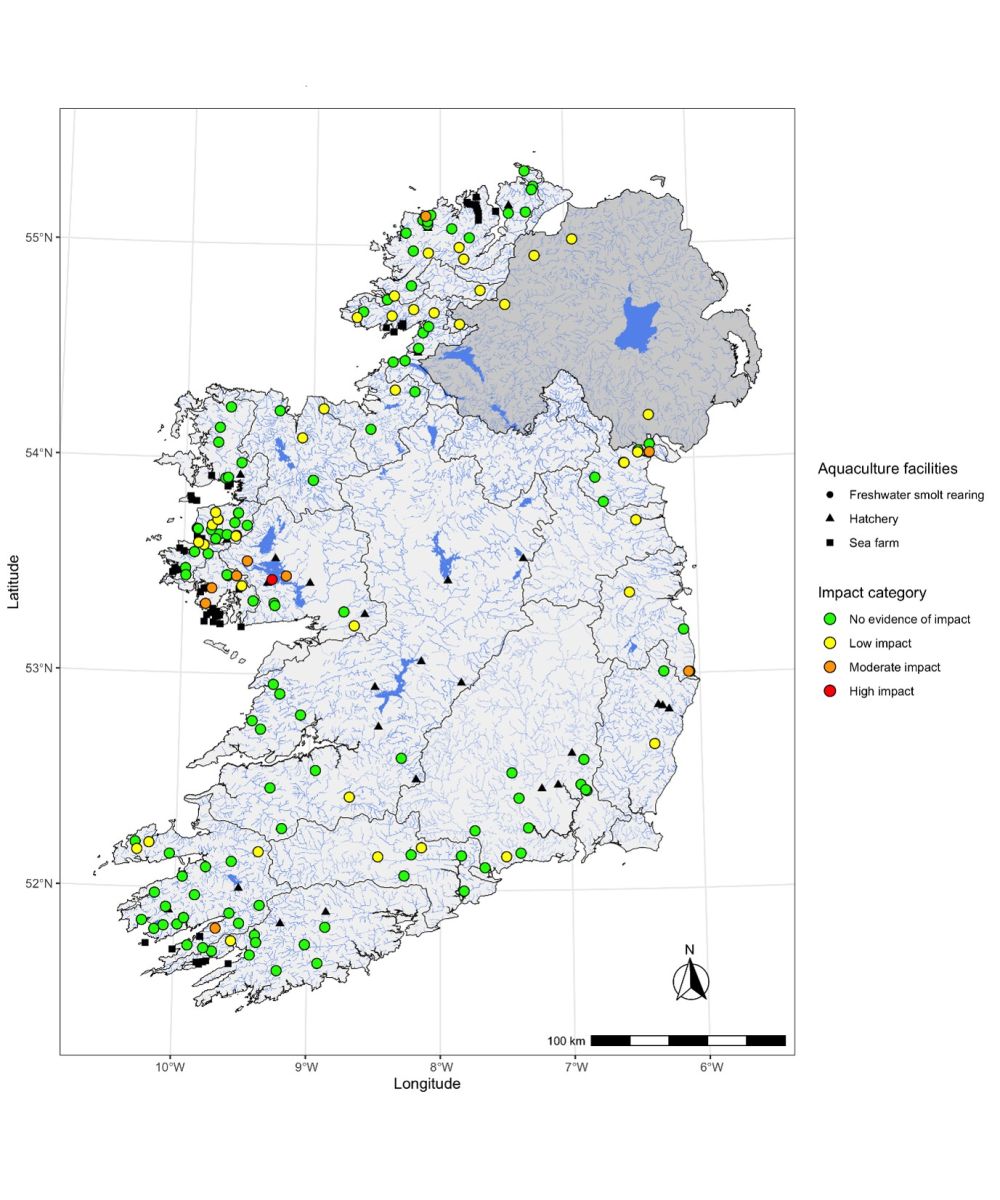
Tengill á skýrsluna: „An assessment of the level of genetic introgression in Irish wild salmon populations from farmed escaped salmon (GeneFlow)“